Thanksgiving seating chart: how to seat everyone
Most of the work is done in five minutes with a pencil. Draw the table on paper, write each guest's name on a sticky note, and move the notes until the table looks right. It's much easier to fix a bad seat on paper than at 3 p.m. with the turkey getting cold.
Where to put people
- The host sits at the kitchen end. They'll get up a dozen times to refill the gravy or grab the rolls, and nobody should have to push in their chair for it. A second host takes the far end.
- Split up people who argue. Across the table is the worst spot, since they'll be face to face all meal. Put them on the same side with at least two people between them, so they can't easily see each other.
- Mix the ages. Alternate along each side: a grandparent, a teen, a parent, a kid. Conversations jump between generations, and the kids have an adult close by to cut their turkey.
- Lefties go on a left corner. Seat a left-handed guest at the left end of a side, where nobody sits to their left, and they won't bump elbows all night.
- Put the talkers in the middle. A good storyteller in the center seat keeps both ends of the table in the same conversation. At the end of the table, they only reach half of it.
- Couples: side by side or across. If one of them doesn't know many people, keep them together. Otherwise seat them across from each other, so they still share the meal but each one meets new neighbors.
- Grandparents get the steady seats. Give them a chair with arms, away from the kitchen traffic and the kids table noise, with their better ear toward the middle. Our list of games to play with grandparents helps after dinner too.
- Early leavers and parents of babies sit near the door. Anyone who will need to step out often gets an end seat or the seat nearest the hallway.
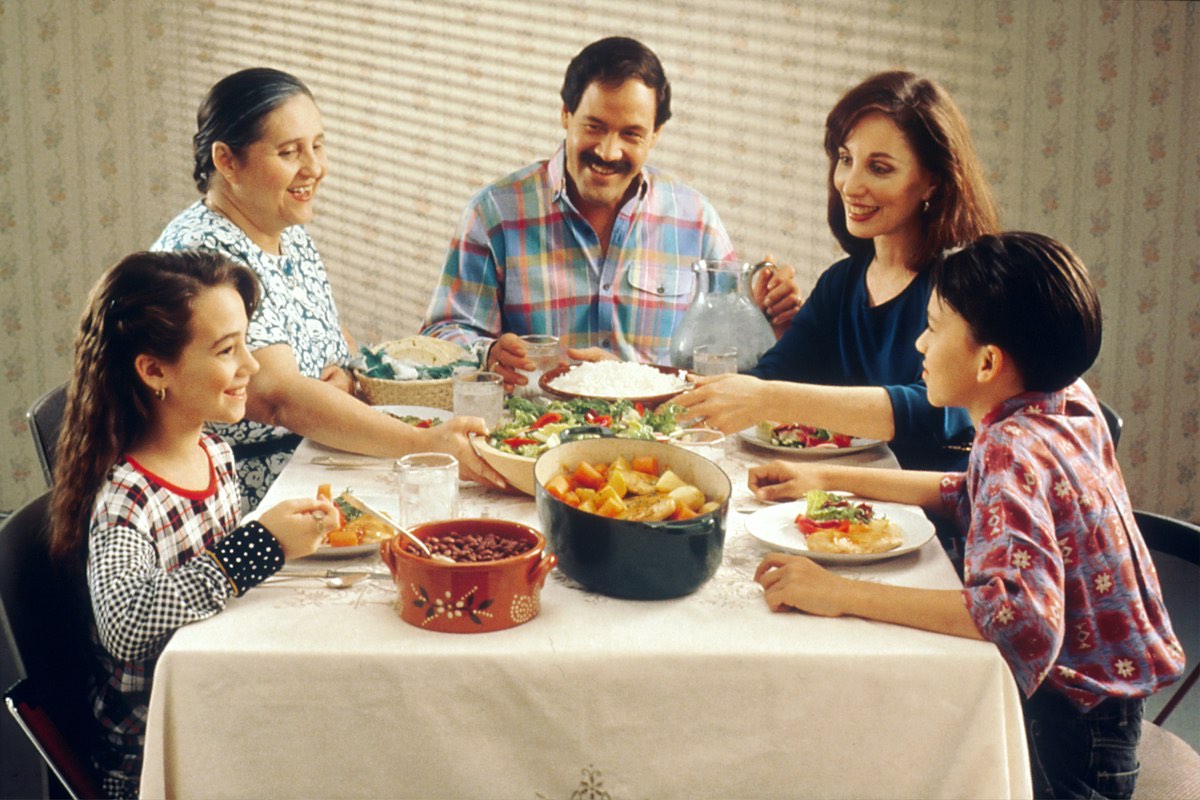
Kids table or not
There's no right answer, and it mostly comes down to the size of the room and how many kids are coming.
| Kids table: yes | Kids table: no |
|---|---|
| Frees up seats at the main table | Splits the family into two rooms or two ends |
| Kids can be loud without shushing | Kids miss the stories and the grown-up talk |
| Easier to use kid plates and cups | Young kids need help cutting and pouring |
| Cousins get time together | A lone older kid feels stuck there |
A simple age cutoff: move kids up to the main table at 12 or 13, or sooner if they'd rather sit with the adults. Keep teens at the main table, even quiet ones. With kids under 6, one adult sits at the kids table too, and that seat can rotate after the main course.
With only two or three kids, skip the kids table and seat each one between two adults they like.
Folding table layouts for 8, 12 and 20 guests
A standard 6-foot folding table is 30 inches wide. Plan on about 24 inches of edge per person, which gives three people on each long side and one at each end if you squeeze. A 60-inch round table also seats 8. The filled circle in each layout is the host's seat at the kitchen end.
8 guests: one 6-foot table
If your dining table already seats 8, use it as is. For 9 or 10, push a card table against the far end and cover the seam with one long tablecloth.
12 guests: two 6-foot tables end to end
Don't seat anyone right on the seam, since the table legs sit there. Shift the middle chairs a few inches to either side. Another option is your dining table plus one folding table in a T, if the heights match.
20 guests: three 6-foot tables
An 18-foot table needs a long room or an open garage. If yours is wider than it is long, set the three tables in a U, with the host at the bottom of the U closest to the kitchen and seats only on the outside edge. At this size, put a set of salt, pepper, butter and gravy at each end, so nobody passes dishes 18 feet.
Place card ideas
- Folded index cards. Fold an index card in half the long way and write the name on both sides, so people across the table can read it too.
- Mini pumpkins. Write names on small pumpkins with a paint pen. Guests take them home.
- Leaves. Press big leaves flat in a book for a few days, then write names on them in marker.
- Kids make them. Hand the kids a stack of cards and markers before dinner. It keeps them busy for 20 minutes, and they love seeing their drawings at every seat.
- A question on the back. Write one easy question under each name, like the best thing someone ate this year or the first concert they went to, and go around the table during pie.
When the table is too small
Two tables, one room
Set a second table as close to the first as you can, in the same room if possible. Put one adult at the second table who can bridge the two, someone who talks easily with kids and adults. Then swap seats for dessert: half of each table moves, so everyone eats with someone new.
Buffet, then sit anywhere
Put the food on the kitchen counter in one line, plates at the start and drinks at the end. Guests fill a plate and sit wherever there's space: the table, the couch, stools at the counter. Save the main table seats for grandparents and anyone who needs a steady place to eat. It's less formal, and nobody minds after the first bite.
A coffee table for the teens
Teens and older kids often prefer the floor cushions around a coffee table to a folding table in the corner. Give them a tablecloth and real plates so it doesn't feel like an afterthought.
Use the seating for teams after dinner
A mixed-up table makes mixed-up teams. Once the plates are cleared, count off around the table, odds against evens, and each team ends up with a mix of ages without anyone picking sides. That works well for Bowl Game, a Fishbowl-style team game on the TV, where kids are often better at acting things out and grandparents are better at the one-word round.
Two teams, up to 16 players. Everyone types slips on their phone, then you describe, one-word and act them out.
Play Bowl GameA 90-minute plan for after dinner →Questions
How do you make a Thanksgiving seating chart?
Draw the table on paper and write each guest's name on a sticky note. Place the fixed seats first: the host by the kitchen, high chairs, and anyone who needs an easy way out. Then split up people who argue, mix the ages, and fill in the rest. Move the notes around until it looks right.
Should you have a kids table at Thanksgiving?
It depends on the room and the kids. A kids table gives young kids their own space and frees up the main table, but it splits the family and the kids often miss the conversation. With only two or three kids, seat them at the main table between adults they like.
What age should kids move up from the kids table?
A simple rule is 12 or 13, or sooner if a kid would rather sit with the adults. Teens usually do better at the main table, even quiet ones. Kids under 6 at a kids table need an adult sitting with them.
Where should the host sit at Thanksgiving dinner?
At the end of the table closest to the kitchen, so they can get up to refill dishes without anyone moving their chair. If two people are hosting, put the other one at the far end.
How many people fit at a 6-foot folding table?
Six comfortably, three on each side, or eight with one person at each end. Two 6-foot tables end to end seat 10 to 12, and three seat 18 to 20.
Should couples sit next to each other at Thanksgiving?
Seat a couple side by side when one of them doesn't know many people at the table. Otherwise seat them across from each other, so they can still talk but each one ends up chatting with new neighbors.